
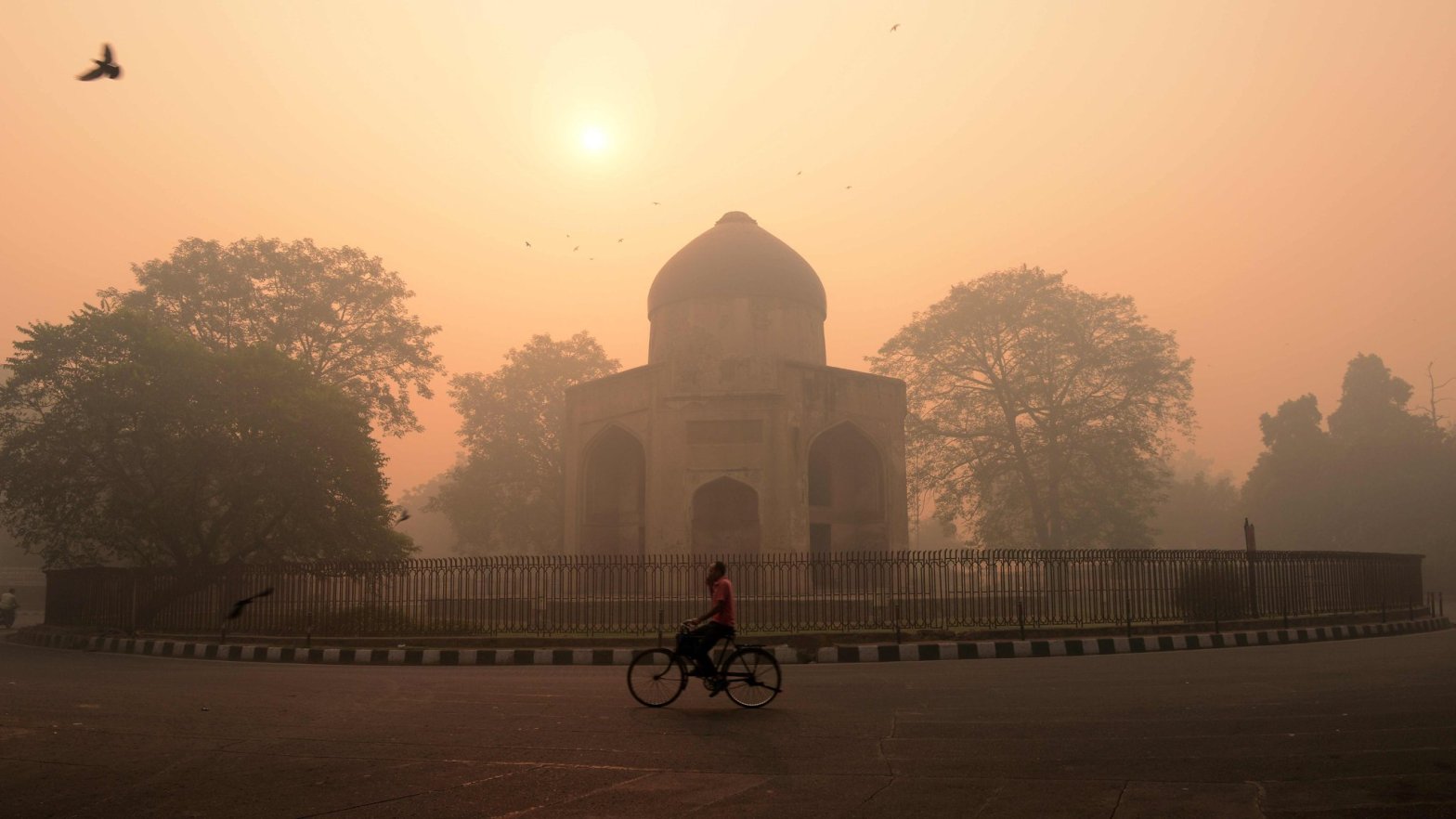
Inside the world’s most deadly air space!
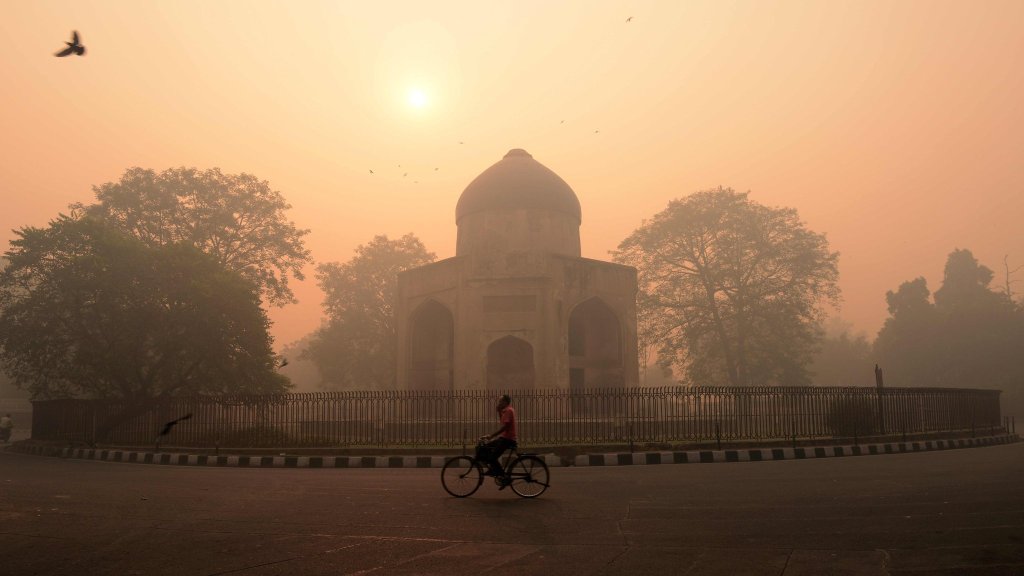
I get nauseous and so dizzy. I have to go to the hospital or the doctor now.
-New Delhi resident-
Ground Zero- Understanding the problem
Officials have implored the people of New Delhi to stay inside, indefinitely. Five million children in India’s capital have been handed face masks. Everyone is to keep windows closed. Contrary to the most fundamental medical advice, the city’s chief minister urged residents this week to “avoid outdoor physical activities.”
– The Atlantic-

Look at the two images laid side by side, this is New Delhi. It serves as India’s Capital city, but what was once a beautiful city in the early months leading to September turns into a complete opposite in the months following October.
Quick Fact check
New Delhi is the world’s fastest growing city and by as of the last census it was estimated to have at least 28.5 million people.
World Bank estimates that by the next decade as we approach 2030 Delhi’s population could approach and even overtake Tokyo’s massive population with a projection of about 36.1 million people in this city alone.

But that raises a big problem, as population increases so does the pollution levels of a country and as you will observe in the next graph Delhi’s pollution level seems to be approaching an alarming level.

As is noted from the charts above, air pollution in New Delhi are constantly above the unhealthy levels all year round. This could possibly be attributed to the rate of constructions occurring in the region with increased population or even the increase in the number of vehicles with time.
If you look carefully too, the trend is that towards the months approaching October, the all-time total spikes, but why is that?

The Rice Problem
The real problem that causes the entire spike in detrimental air pollution does not originate in New Delhi, India but instead in the regions above New Delhi geographically and those are, Punjab and Haryana.

These two regions are associated with one main thing, Rice.
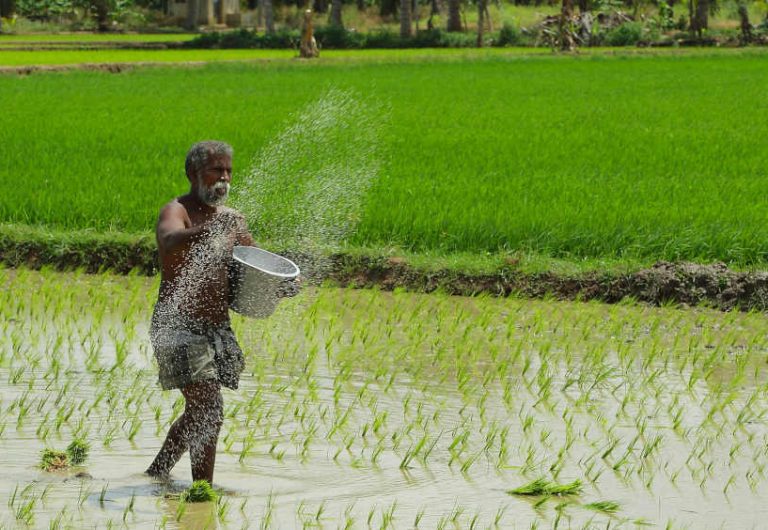
Punjab and Haryana are the bread baskets of India and over the last few years with increased population levels the demand for rice has skyrocketed. This of course has had a negative effect on the environment.
Rice requires large amounts of water and with farmers growing rice all year round, the natural water levels in the soil in the months of January to June end up being heavily depleted and causing a major decline in the amount of the natural resource in the region.
So to regulate the amount of water authorities passed The Haryana Preservation of Subsoil Act in 2009 which banned rice planting before mid-June, that meant that rice farmers could not plant rice until just before the Monsoon season, which would ease and replenish the ground water, this pushes rice harvesting into the months of September towards the end of the year.
This significantly reduced the amount of time that farmers would have to prepare their farmlands for the next planting season, so farmers began to burn their rice stubble.

The Butterfly Effect

The burning of the crop stubble coupled with the environmental conditions of the region at the time cause all the smog produced to go down to New Delhi.
First, the Himalayas act as a barrier directing the air towards New Delhi coupled with the cold air that originates during winter which together with the warm lowland air carries this Smog straight to Delhi.
In Delhi, when the air arrives it mixes with the dust and urban pollution in the region, the warm lowland air acts as a blanket over the region, preventing the toxic air from escaping. This is what causes the air pollution levels to skyrocket way above healthy and recommended levels.
When I open a New Delhi resident’s lungs today in every one of them I barely see pink healthy lungs and this is chaotic.
-Dr. Arvind Kumar- Founder trustee, Lung Care Foundation
In November of 2019 the Supreme Court asked the states of Punjab and Haryana to stop crop stubble burning immediately but thus far this has not yet changed, farmers still see it as the most effective way to clear their lands.
The Resolution?
Because New Delhi cannot be able to influence other states in India, it has decided in the months of October towards the end of the year, it halts all construction in the region and puts up restrictions on vehicle use. This reduces the amount of Urban Pollution in the area but as long as the upper regions of Punjab and Haryana continue burning their stubble, the smog will return year after year.
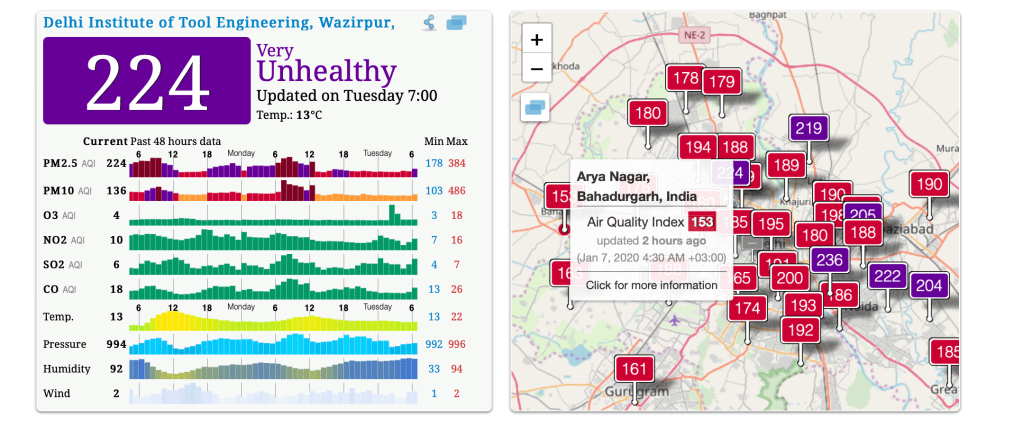
Below is a real-time chart of the air quality index today
Resources
We Are Running Out of Air – The Atlantic
 Sparky Science