
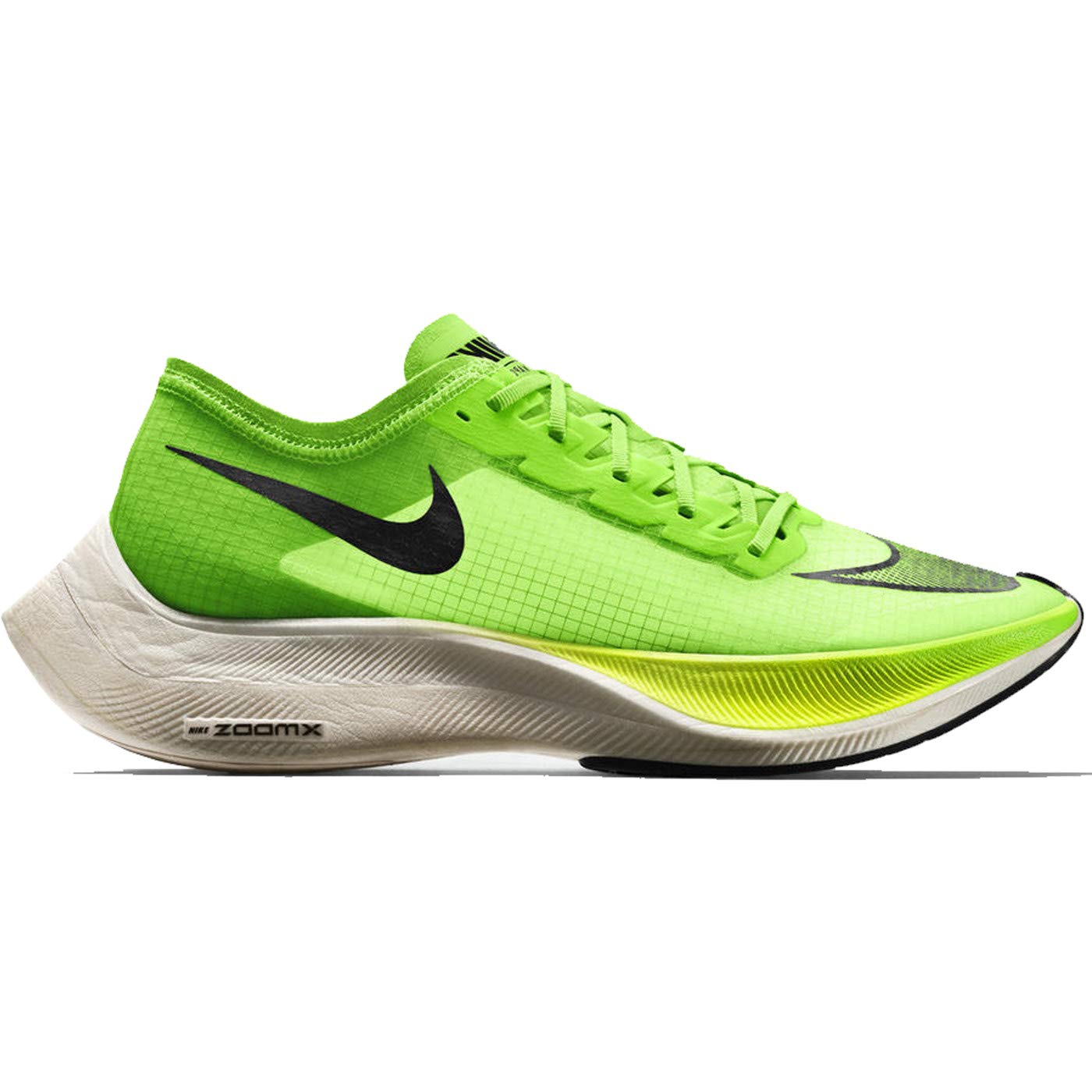


The new way for most athletes to easily win in any sport!

“Those super-fast Nike shoes are creating a problem!”
By Amby Burfoot New York Times
On July 24th, 2020 the Tokyo Olympics shall begin and so far, all over the world athletes and respective agencies that will be over-seeing the games have been preparing endlessly for what should be a successful Olympic season.
The World Anti-Doping Agency (WADA) has so far been preparing round the clock by testing athletes all year round from time to time and offering guidance where necessary, to ensure that all athletes do not have any harmful chemical substances within their bodies which could potentially alter their performance; giving them an advantage over other players.
Did you know that athletes are even prohibited from having Caffeine in large amounts, that immediately strikes off all possible energy drinks and even medications. This is a show of how strict this agency can be.
But as the world advances, athletes and companies are seemingly finding new ways to beat the system. Welcome to the new era of doping: Technological Doping.
What is Technological Doping and what does it entail?
Technology doping is the practice of gaining a competitive advantage using sports equipment. The World Anti-Doping Agency (WADA) considers prohibiting technologies if they are “performance-enhancing” or “being against the spirit of the sport”. In 2006, WADA initiated a consultation on technology doping which is now officially recognised as a threat, whilst the decision to allow or ban a new technology, specifically relating to sports equipment, is the responsibility of each sport’s own governing body.[1]
Cite: Wikipedia
To break this down it simply refers to the process by which athletes and sporting agencies use equipment such as: shoes, racquets and even sportswear, to enhance the performance of an athlete in any particular sport. This performance enhancement, may either be of harm to the sporting spirit itself or be used maliciously as a way to reduce competition. Making the playing ground uneven for other athletes.
Flashback to 2008
It’s the Beijing 2008 Olympics and the swimmers including stars such as Michael Phelps are lining up at the diving boards ready to dive for their countries, chasing the gold medals.
What the crowd would see on that day and the next few swimming races at the Olympics would be mind boggling.
Over those few days, 23 out of 25 swimming world records were broken in what seemed to be an extra ordinary show. But wait something’s wrong, 23 world records smashed all of a sudden at one event all by athletes wearing one common swimsuit…….. The Speedo LZR Swimsuit

In 2008 just before the Olympics, Speedo released a new type of swimming gear that would change the entire swimming industry.
The suit was different!
These controversial suits were faster and more high-tech than those used in the past. Made of polyurethane, the full-body suits work to trap air and allow for increased buoyancy. By compressing muscles, the suits also helped to reduce the workload for swimmers, thus reducing fatigue and allowing for improved stamina and a stronger finish at the end of a race.
Did I also mention that they were designed to mimic shark skin, by being fully hydrophobic, they allow athletes to reduce drag and maneuver faster in the water, increasing their overall speed and hydrodynamics.
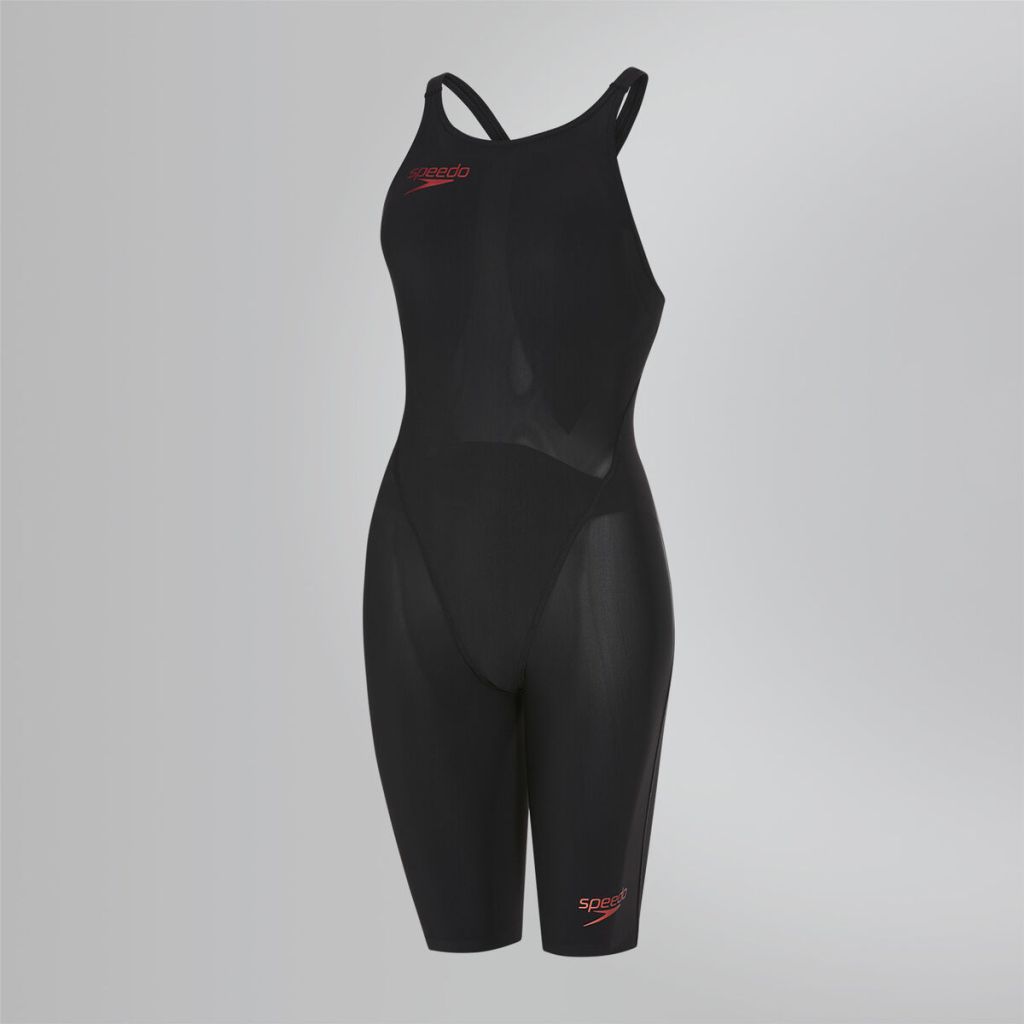
What would follow after the Olympics in 2008 were more records being broken at various events and that is when FINA (Fédération Internationale de Natation) banned all body-length swimsuits. Men’s suits could only maximally cover from the waist to the knee. Women’s suits could only cover from shoulder to knee. They also stipulated that the fabric used to make the suits must be a “textile” and the suit could not have fastening devices, such as zippers. These new rules took effect in January 2010.
Nike Vapourfly next%
For the last few years Nike has been working round the clock to investigate if at all runners could possibly get faster. They called in 3 athletes in 2017 including Champion Eliud Kipchoge and put them to the test.
That is when the term Breaking2 was coined with the goal being to break the two-hour barrier, they trained the athletes and gave them all the perfect conditions to ensure that they could possibly break the record.
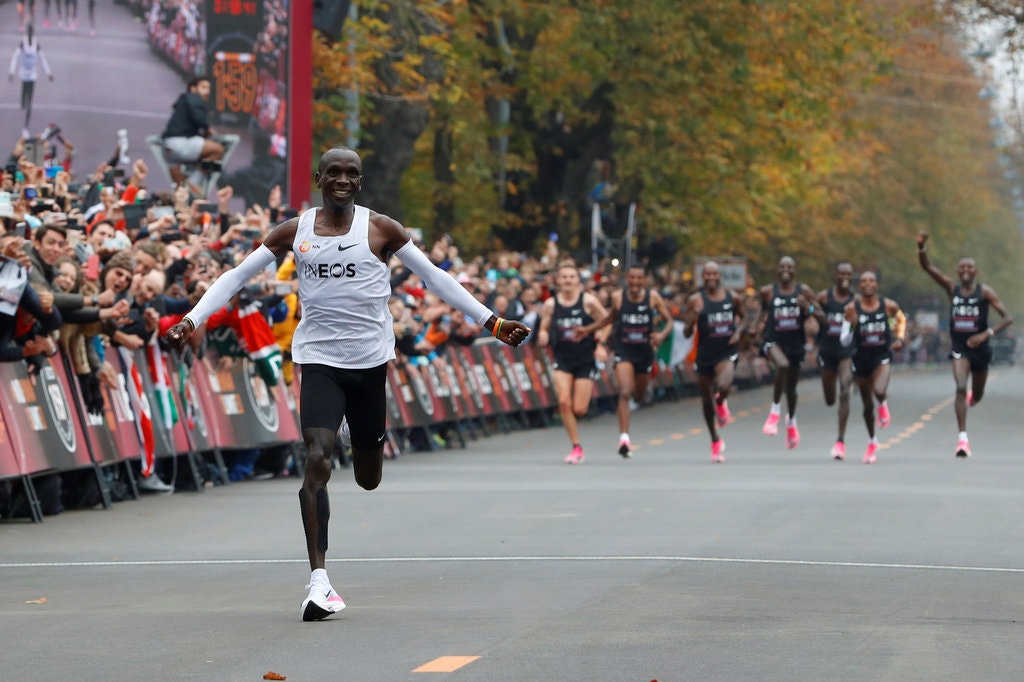
Well they achieved that goal on the 12th of October this year. Eliud hitting an official record time of 1:59:48. Proving amongst other things, that no human is limited.
While a lot of science and logistics went into planning the run and preparing Kipchoge. Th biggest aid of all? The shoes Nike made.

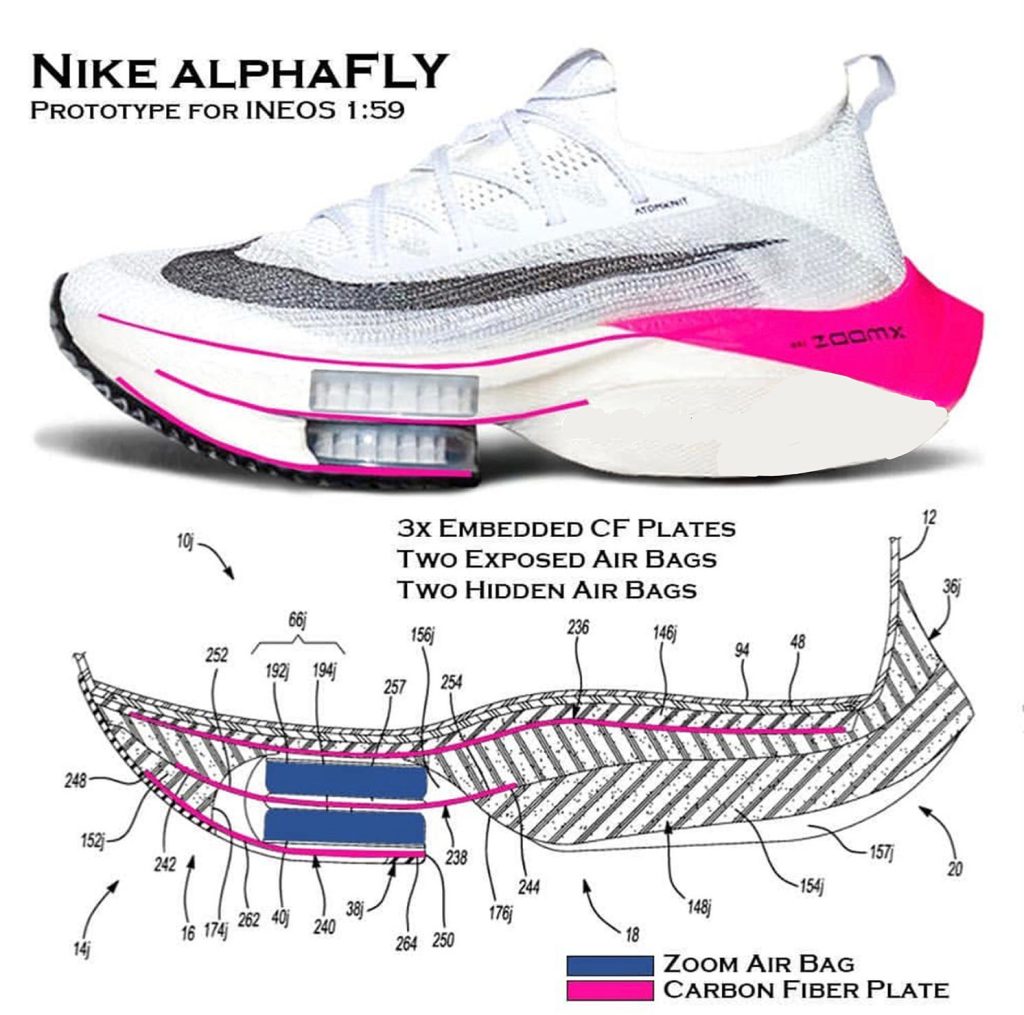
The carbon fiber plate plays a role—but not in the way many people think. When the Vaporfly was first unveiled, critics of the shoe speculated that the plate acted like a spring. But Hoogkamer’s findings suggest the plate’s spring function is negligible. What the plate does do is improves runners’ ankle mechanics by stabilizing the joint and reducing the load on the calves. At the same time, its stiffness helps keep runners’ toes nice and straight, allowing them to preserve the energy they would otherwise spend flexing them.
The midsole (Nike calls it ZoomX, but foam nerds know it as Pebax) is uncommonly compliant and resilient. Translation: It’s squishy and springy, respectively. Those properties enable the foam to absorb the energy a runner applies when their feet meet pavement and return a portion of it to their stride … somehow. How it works, exactly, remains unclear. The researchers originally hypothesized that the foam would save runners energy by reducing bending at their knees, but that turned out not to be the case.
These shoes coupled with Eliud’s phenomenal talent made him one of the greatest test runners today as he sprinted for the finish line. Though at the Chicago marathon days later. Brigid Kosgei breaks the Women’s marathon world record by 81 seconds, wearing the same type of shoes Kipchoge was wearing.
This began to raise eyebrows, especially towards Nike and the future of running and other sports, with a major concern.
The finish line.
The biggest concern is that Technological Doping could greatly harm the future of sporting. Not only in swimming and running have such adaptations been observed, but even in the field of Tennis, by changing the composites and materials that the racquets are made off.
Even in sports such as Basketball and Cycling where mechanical gadgets can be used to either propel the athlete forward or to help them master their skills by hiding a chip in their elbow sleeves. These technologies are sending WADA from end to end trying to find ways to curb these irregularities and save the future of the sporting industry.
The Biggest Concern?
The biggest concern is that only a handful of athletes in the various sporting categories will be able to access these technologies, and that’s right, only those who are sponsored by Nike or Speedo will have the upper hand. These companies patent their technologies and make it very hard for their competitors to find alternatives and that is what brings the whole ethical issue behind the growth of technology in sports.
But all in all, we better find a solution before the race gun’s fire at the Tokyo 2020 Olympics!
Keep It Sparky!
Resources
The Science Behind Nike’s New, Even Faster Marathon Shoe by Wired
High-tech Olympic ‘doping’? -CNN
Pulling All the Strings – New technology in tennis has proved at times harmful to the game, at times beneficial, but it is always controversial -WSJ
 Sparky Science
Talent is not enough especially now that technology has changed how we do things, just like in Malcom Gladwell’s OUTLIERS …other factors are equally important…great insight indeed
LikeLike
Yes and yes I totally agree😊💯
LikeLike
Great stuff my friend💪
LikeLike
🙏🙏🙏
LikeLike
I learnt a lot! Such innovations are not so bad, just but for the unfairness they bring to the sport. I wonder what military science have got up their sleeve.🤔.
Insightful work.
LikeLike
The military must have the best tech with them of courseee. But yes I do agree that when it’s used to gain competitive advantage over others then the logic behind sporting is lost.
LikeLike
👏👌golf once had doping too
LikeLike
In what ways please share your insights
LikeLike