


How we can flatten the COVID-19 curve
The Infection Trajectory

This is a live data sheet and map of the declared pandemic COVID-19. Today the virus has spread rapidly all over the world and has hit 6 of the 7 continents on our planet; but, in some parts of the world, the situation is getting better and here’s why…
Life’s Cancelled 😦
No more sports, IMAX movies, school, parties, or events. No more gossiping at the office or meeting your friends at the club. NOTHING. Just curfew. Just you, your close family, your pet, and of course, Netflix. Maybe some online classes too:(
Basically everything that makes life interesting for us social beings has to be sacrificed in an effort to combat this life threatening virus 🦠 that has ravaged the world and continues to be highly infectious: but, it’s all for a good cause.
“Fighting the Coronavirus depends on you”
Dr. Tedros Adhanom Ghebreyesus ( WHO DIRECTOR GENERAL)
COVID-19 Case Fatality
On March 11th 2020, the WHO declared the Coronavirus a global pandemic, meaning that there was no possible way to control it or to stop its spread across the world despite potential to slow it down.
For those who have come into contact with the virus and have been infected, the Centers for Disease Control (CDC) reports that 80% of the cases are mild leading up to mild pneumonia, while 20% of the remaining cases can lead up to severe respiratory problems with 1-2% proving fatal.
That fatality rate is much lower for younger people and relatively higher for older people. This is reflected in Italy wherea much higher proportion of the population is older, causing it to be the worst hit country by the virus in Europe.
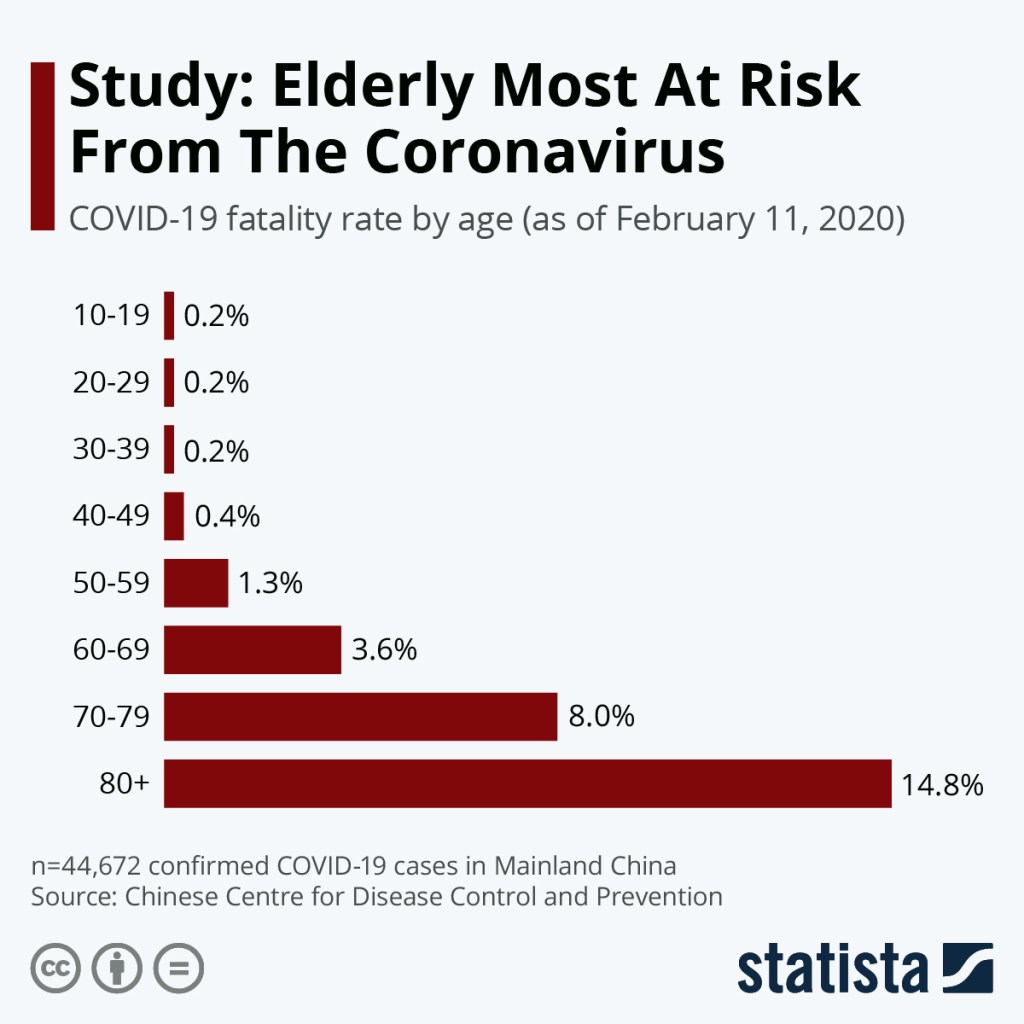
It also seems that people with underlying chronic health problems have a harder time fighting the virus and are more at risk of dying.
Today, the Coronavirus is deemed more contagious than the flu as the virus is spread by airborne particles transmitted by coughing, sneezing, or touching a surface on which the virus still lives and then touching your eyes, nose or mouth.
After getting infected, it could take an average of 5-7 days before you feel sick and the symptoms begin to show. During this phase, one is able to spread the virus rapidly from one person to another without knowing it.
“We cannot say this loud enough, but all countries can still change the course of this pandemic.”
Dr. Tedros Adhanom Ghebreyesus ( WHO DIRECTOR GENERAL)
Health Systems
Diseases begin to become fatal when everyone seeks medical attention at once, overwhelming health systems.
In any hospital at any given time, the capacity to provide medical treatment for potentially fatal diseases depends on the number of beds available.
Already, some of these beds are occupied by people from accidents, people with ongoing medical treatments caused by heartattacks, stroke and the likes. This leaves behind a limited number of beds that would be important when an emergency occurs per the day.
Now, take the case of a healthy person who goes to the office and catches the virus. He or she feels okay as the symptoms have not began to show. This person then gets on a subway where they proceed to infect three other people. Afterwards, he/she decides to go out to a basketball game or a social gathering where another group of people catch the virus. One of the newly infected might be elderly and gets a severe case and has to be hospitalized, while the rest are asymptomatic and go on spreading the virus.
Over time, this increases the number of severe cases being reported at the hospital, filling capacity and limiting its ability to attend to the rapidly growing number of cases being reported at the hospital. In addition to the extreme Coronavirus cases, the hospital still has to care for patients suffering from other potentially fatal accidents. This is when the chaos really begins, as otherwise avoidable deaths occur due to the influx of people going to the hospital.
This is where you come in. Yes, you the healthy person.
Social Distancing: Definition
According to newscientist.com: Social distancing practices are changes in behaviour that can help stop the spread of infections. These often include curtailing social contact, work and schooling among seemingly healthy individuals, with a view to delaytransmission and reduce the size of an outbreak.
This simply implies no more going to school, the office or your local football match. Instead, we encourage: working from home, closing schools and promoting distance learning, and cancelling sports tournaments. In some cases, such as in New Jersey, implementing curfews can help keep people indoors and limit the spread of the virus.
The End Result?
By encouraging social distancing, we are able to greatly reduce the number of healthy people being exposed to the virus at any one time. This easily decongests our hospitals and allows them to treat active cases and other accidental cases. This means that the number of cases reported in hospitals per day greatly reduces so doctors and nurses can adequately tend to patients.
See why it starts with you? Yes, you reading this.

This is why, in countries such as China, the number of emerging cases has greatly reduced and the same can happen over time in other countries. Below is a chart showing the curve beginning to take a dip:

Just hours ago, the Director General of the WHO announced that countries such as South Korea have begun to witness fewer emerging cases. The same can happen in other countries if they implement this strategy and continue to track, test, and treat their citizens to take control of the situation as soon as possible.
This must be the strategy of every health system to help put an end to the pandemic
Addressing Particular Concerns*
First of all, do not wear a mask unless you are sick or attending to someone who is sick. When you wear masks and you are healthy, you not only reduce the supply for the sick and health practitioners, but you also increase the sense of hysteria for people around you.
Second, climate does not affect the Coronavirus. From the evidence so far, the COVID-19 is at home in hot and humid weather, as well as the cold. You could try having a very hot bath – but that wouldn’t do much either, according to the WHO. Your body temperature will not be affected greatly by normal changes in outside temperature, which means the coronavirus will always be comfortable.
Third, here are some other hygiene and self-care myths the WHO has been keen to clear up include:
- There is no evidence that regularly rinsing the nose with saline has protected people from infection with the new Coronavirus.
- Spraying alcohol or chlorine all over your body will not kill viruses that have already entered your body.
- Antibiotics do not work against viruses, only bacteria.
Lastly, several claims that the virus 🦠 cannot affect Africans are false and dangerous as one doctor says, “The disease affects all people indiscriminately,” she said adding, “No, Africans are not immune to Coronavirus.” [Geriatrics specialist Dr Stella Mutali ] So, Africans or black people are not immune to the Coronavirus!
When will we get a vaccine?
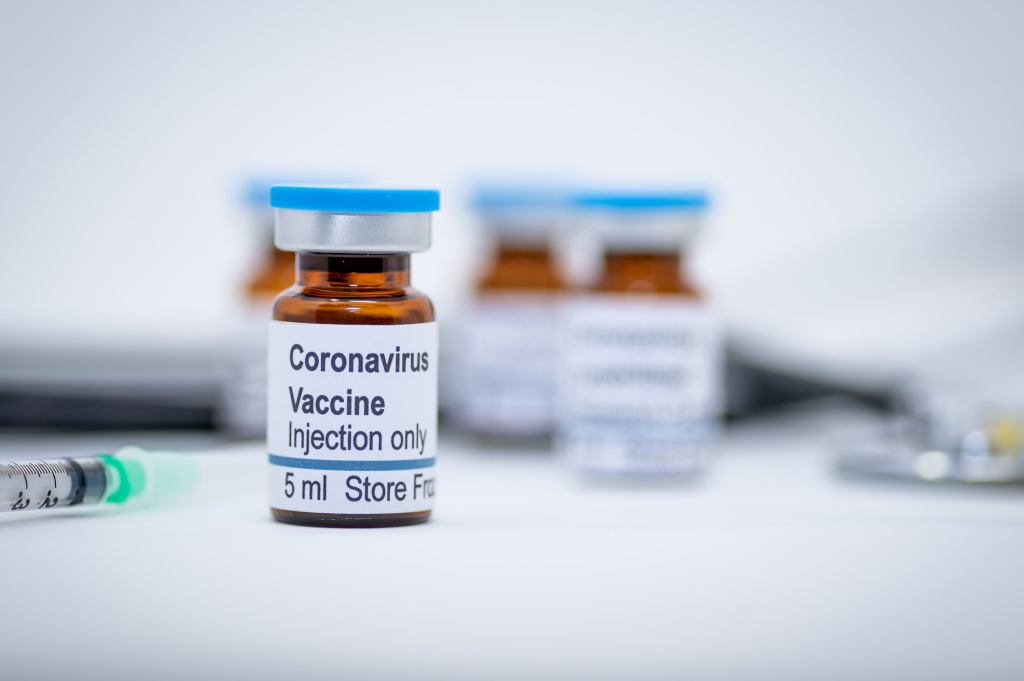
Concerns about whether we will get a vaccine for the virus soon are quickly growing, but its important to note that a vaccine must go through significant testing before it is dispatched for mass use.
Sixty days ago scientists in China shared the gene sequence for the Coronavirus and scientists in labs all over the world have been racing to make a vaccine. One vaccine has already begun its phase one testing, and if it passes all subsequent stages, it is expected to be in mass production and use about a year from now.
For many emerging viruses, the medical industry has not been able to allocate its time and resources to making vaccines for them, because its deemed unprofitable. Why? If you consider viruses such as MERS-Cov and SARS-Cov, they do not have vaccines, because these Coronaviruses completely disappear after some time until a new strand emerges. This is unprofitable for pharmaceutical companies, because any new vaccine that cures only this kind of Coronavirus may not be needed long-term.
That is why with this virus, scientists are working around the clock to find a vaccine that can both prevent this current virus (COVID-19) and other future Coronaviruses.
What can I do now?
Well, you can catch up on Netflix, work from home, catch up on online classes and, of course, ensure you are using smart hygienic practices. This means washing your hands often, avoid touching your face, sanitizing your phone, maintaining social distance.
That’s all for now! Stay Safe! See you soon and feel free to ask questions in the comment section!
Resources
Flattening the COVID-19 Curves – Scientific American
Coronavirus: What is social distancing and how do you do it?
Read more: https://www.newscientist.com/article/2237664-coronavirus-what-is-social-distancing-and-how-do-you-do-it/#ixzz6H3sK4zBk
Coronavirus outbreak: Everything you need to know about social distancing
 Sparky Science
Thanks for this kiddo 💯
LikeLike
😌😊 it is my pleasure
LikeLike
I can really tell how passionate you are about your blog! Spectacular work!!! Definitely waiting for more!
LikeLike
I appreciate you so much for taking your time to read the post 🥳 feel free to subscribe if you haven’t already
LikeLike
This is really good👏👏
LikeLike
❤️❤️
LikeLike
Thank you, Ryan. This is very accessible content and in the face of overload of information, I shall choose to read more well researched hed articles like yours as opposed to all the forwards I get 🙄🙄!
LikeLike
Thank you for choosing Sparky Science! I will keep you updated with relevant Information as they come!
LikeLike
Ryan this was amazingly put out and I think a lot of people need to realize and see how serious this pandemic is 😌
LikeLike
Thank you so so much Mellissa glad it was super informative!
LikeLike
I like this bro. Very informative and interesting.
LikeLike
Glad to have been of help bro!
LikeLike
More people should read this article and not ‘rumors’ that are made by people on social media! Keep up the good work bro👌🏻 soldier on 🙂
LikeLike
Thanks brother will keep working to get more and more content out a midst this crisis
LikeLike
Very informative Napo! Forgot to sanitize my phone 😉 thanks 🙏🏾
LikeLike
Yes your phone too! 😂😂
LikeLike
Very simple and informative. Paints a different perspective as to why we should distance ourselves in terms of some beds being occupied already before COVID.
LikeLike
Ryan, mein Freund. Danke für diesen sehr gut recherchierten Beitrag. Weiter so. Gruß von deinem deutschen Freund.
Translated :
Ryan, my friend. Thanks for this very well researched post. Keep it up. Greetings from your German friend.
LikeLike
Thank you so much Guido for stopping by hope you and your family are well 🥳🤩
LikeLike
Vielen Dank Guido, dass Sie vorbeischauen und hoffen, dass es Ihnen und Ihrer Familie gut geht 🤩
LikeLike
This article cleared alot of things up for me. You’re amazing for this keep producing these articles the world needs it
LikeLike
Thanks so much for the motivation Tamanda and the kind words too. I enjoy writing such blogs and I will continue to create more interesting and intriguing blogs! Glad you loved it ❤️
LikeLike
Ryan, the timing of your article today was perfect and your arguments on social distancing during this period of the Coronavirus pandemic compelling. Your well thought out article, written in a simple and concise way brought out all the vital information and key tips that one needs to remember. Keep up the good work… and keep writing! Am so proud of you 😊
LikeLike
Thank you so much for the support mum ❤️🥳⭐️ love you so much ⚡️
LikeLike
Honestly proud of you ski 💪🏾
LikeLike
Glad it helped bro!🤩🤩
LikeLike
How informative 😇 This blog is amazing well done ‼️
LikeLike
I am soo thankful for the massive support you continue to show me ❤️ Chelsea. I am truly thankful ⚡️🥳
LikeLike